
Executive Facilitation
When the conversation matters as much as the decision.
Independent facilitation for Boards and senior teams where difficult issues, competing perspectives or strained relationships are preventing progress.
- The facilitator does not take responsibility for the decision.
- The role is to create the conditions in which the people responsible can think more clearly, challenge more constructively and reach better-informed conclusions.
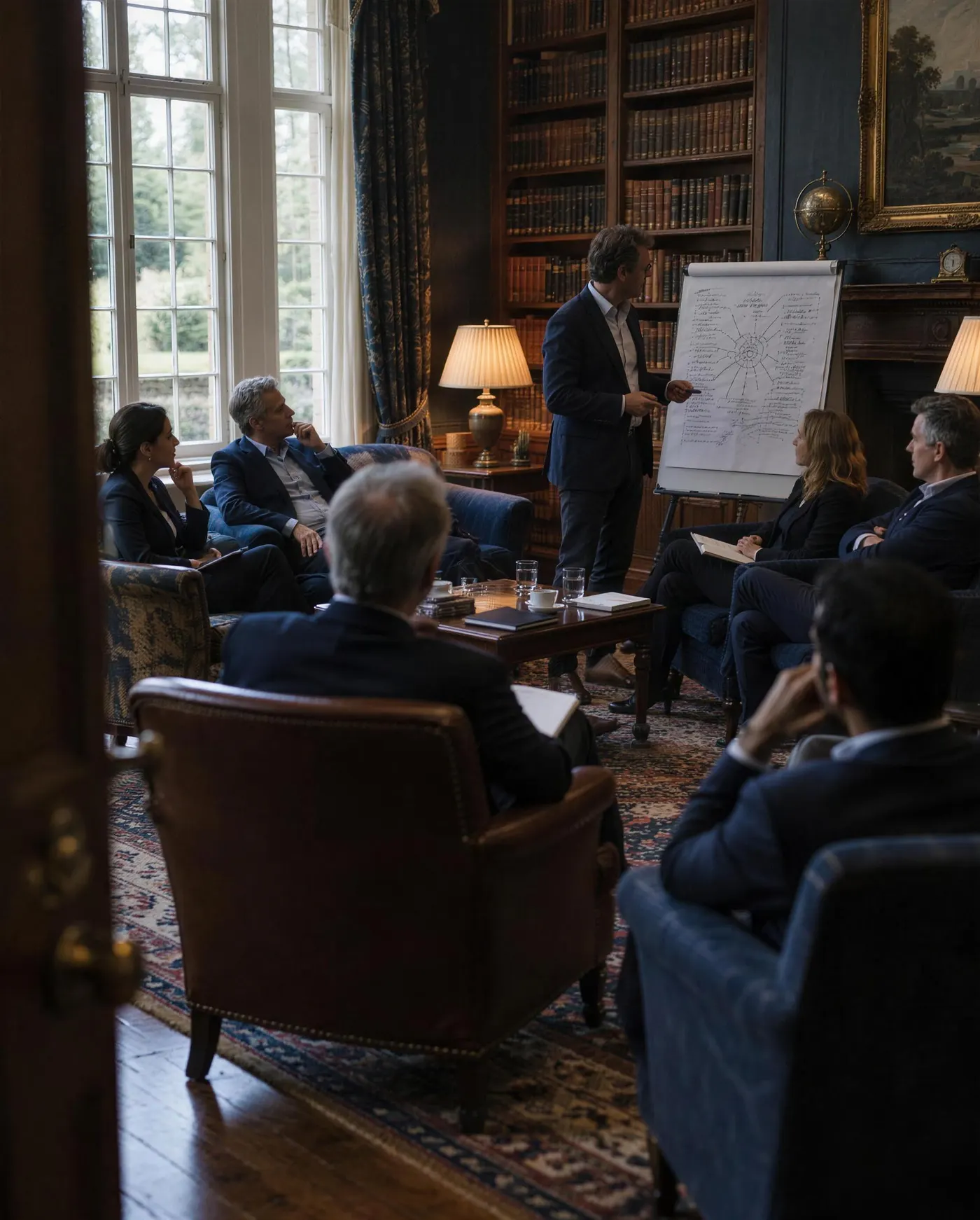
Services may include

-
Board Facilitation
Facilitated Board discussions around strategic, governance or organisational questions.
-
Executive Team Facilitation
Structured sessions where Executive Teams need to move beyond recurring or unresolved issues.
-
Strategic Offsites
Design and facilitation of senior leadership sessions focused on strategy, priorities, alignment and decision-making.
-
Difficult Conversations
Independent facilitation where issues are recognised but are not being addressed productively.
-
Leadership Team Alignment
Sessions designed to surface competing assumptions, clarify expectations and rebuild productive working relationships.
-
Decision-Focused Workshops
Facilitation around complex decisions where evidence, competing interests and organisational implications need to be explored carefully.
-
Transformation & Change Facilitation
Senior-team discussions around major transformation, organisational change, governance, accountability or delivery challenges.
-
Partner & Professional Services Facilitation
Facilitation designed for partnership and professional-services environments where authority, commercial relationships and senior stakeholder dynamics require particular sensitivity.

Amna's facilitation experience includes Board effectiveness, transformation leadership, negotiation, stakeholder influence, leadership under pressure and executive decision-making.
Read Amna's storyHow an engagement works
Every engagement starts with the situation, not a standard methodology.
-
A confidential conversation
Tell us enough about the situation for us to understand the nature of the matter and the support you may be considering. All initial enquiries are treated in confidence.
-
Scope agreed at the outset
Who has commissioned the work, its purpose, scope and reporting arrangements are agreed before any substantive work begins, including any question of independence.
-
The work, in proportion
The scope stays proportionate to the situation, working directly with the organisation or alongside internal teams, legal counsel and other professional advisers.
-
Clear conclusions and next steps
Findings and recommendations are communicated clearly, so those responsible can make informed decisions about what happens next.
Typical buyers
- Chairs
- Boards
- CEOs
- Executive Teams
- Senior Leadership Teams
- Partnerships
- CFOs
- Transformation Sponsors
Related: CEOs & Executive Teams, Professional Services & Law Firms, Board & Governance Advisory, A client example